Showing posts with label gardening. Show all posts

Thursday, December 1, 2011

In the Garden: The Last Things

The last woody plant to hold its leaves as the garden goes to sleep in December is the oakleaf hydrangea. I saw it in the late afternoon sunlight and wanted to write an ode to a leaf. 


The last shrubs to bloom in the garden are the camellias. In my yard they're the size of small trees. I believe the one below is the variety (appropriately named) "Yuletide." The flowers are fragrant, unlike those of most camellias.


The flowers have never clustered so thickly.


I don't know the name of the camellia below, but it blooms on and off throughout the winter. If it's cold, its blossoms freeze and turn brown, but new buds emerge and bloom. 


It has lovely rose-like blooms. 


I thank the unknown gardener who planted it.


A white camellia in the sasanqua family also blooms prolifically.


Last but not least, here is some low-growing mistletoe I saw on a tree on the golf course last week. It's rare to see mistletoe growing at eye level, though I did get lucky one year in finding sprigs with berries growing low. 


Did anyone notice the difference between the first photos on this post and the last two? :) 

Saturday, June 18, 2011

June: What's in Bloom

The garden surprised me this morning with this beautiful bloom, the first of the season on Rose of Sharon 'Helene.'


Often I am disappointed that I can't get the camera to record the beauty of what I see. But sometimes the camera makes beauty out of something ordinary. I almost missed the hidden bloom on the Rose of Sharon. 


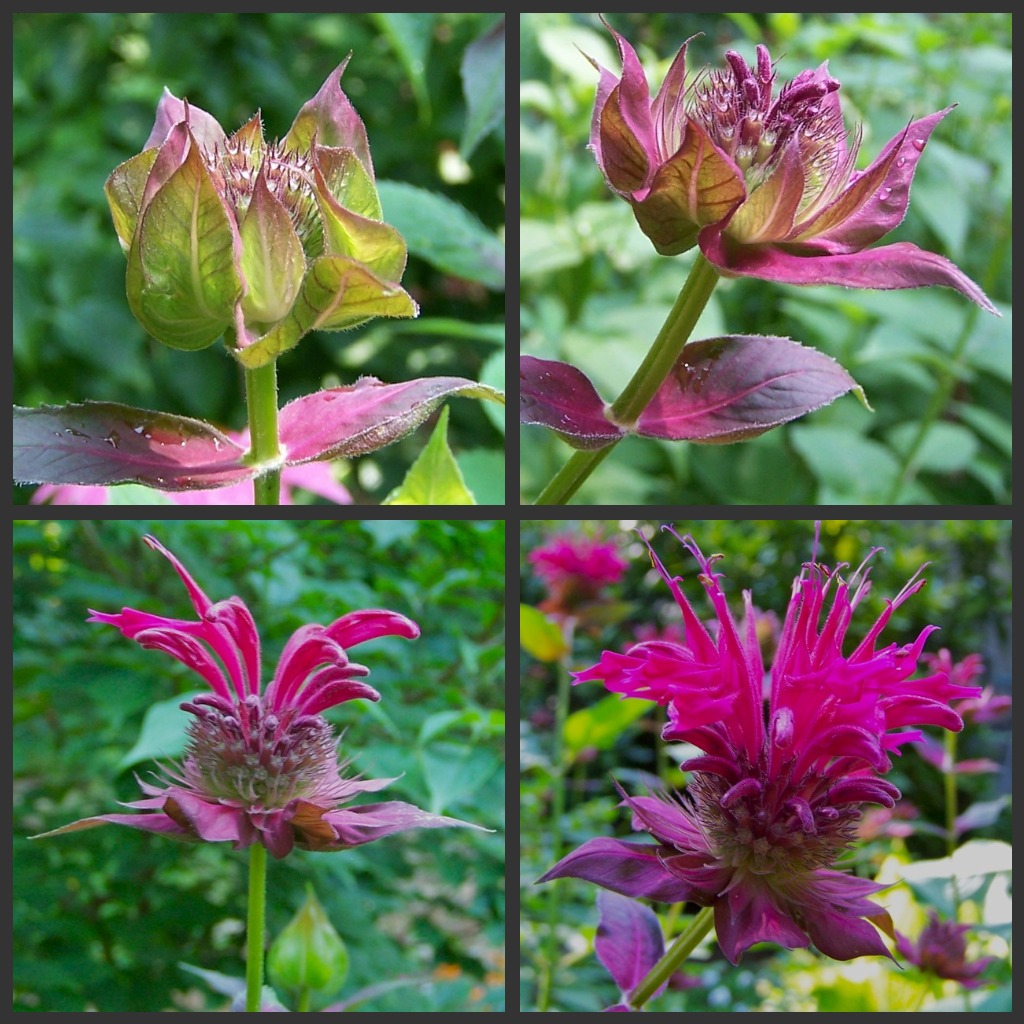
I've been watching the beebalm flowers emerge.  Before I picked up the camera and began documenting my garden, I rarely paid attention to the beauty of emerging blooms. 


Beebalm (Monarda didyma 'Raspberry Wine') has commandeered a sizable patch in my too-small sunny perennials bed. Actually, it's only a part-sun bed, but sunny is a relative term in the woodland garden. The bees and butterflies love it, so I don't have the heart to groom the monarda patch the way I probably should. 

It grows with coneflower in my garden. Hmm ... these were sold to me as dwarf coneflowers a few years ago. Maybe one of the plants is still a dwarf.


I've also been watching the coneflowers (Echinacea purpurea) emerge. They have a different personality in each stage. Coneflowers, too, attract butterflies. 


Blue flowers look cool in the heat. Salvia guaranitica grows in part sun and is visited regularly by the ruby-throated hummingbird. 


Dwarf plumbago (Ceratostigma plumbaginoides)
is attractive on the edge of the bed. I think it would flower better in full sun, but I'm happy with anything that flowers. 


A frilled pale yellow lily (name tag long lost) has been blooming prolifically under Salvia guaranitica. It has a wonderful fragrance, too. 


Speaking of fragrance, Gardenia jasminoides 'Radicans' is now in full bloom. It's a low-growing variety that blooms after Kleim's Hardy has finished flowering. It has wonderful, intricate blossoms. 


Abelia is also in full bloom. Its blooms are dainty and waft a sweet scent over the stone walkway. I like its arching branches. It nicely screens the neighbor's house, too. 


This aster is blooming now. I lost its name tag, too. I didn't suspect I would become a garden blogger.


I adore the cheery yellow blooms of rudbeckias (Rudbeckia hirta) and the way they self-seed. They don't bloom much in part sun and tend to flop over. Darn. The goldfinches don't help when they try to land on the stems. (Imagine being light enough to cling to a flower stem.)


Virginia mountain mint (Pycnanthemum virginianium) is a native plant with miniature blooms that attract pollinators, including butterflies. 


Last is one disappointment, Coreopsis verticillata. I planted three plants five or six years ago. They bloomed well the first few years and spread to form a mass. As soon as they took over a good portion of the "sunny" perennial bed, they decided to be stingy with blossoms. I threatened them last week after reading Jean's post, Bloom or Get Out.  I see what look like tiny yellow buds on them, but they've been there for weeks. I'm tempted to pull them out now, but it's really stupid to put in new plants in midsummer in North Carolina. I should know - I do it almost every year. 


When I look, I always find more in bloom than I think in the woodland garden.


Thursday, November 5, 2009

Pumpkin Magic

This fall I decided to deploy an extra weapon in my fight against the seasonal blues: witchcraft. One carved pumpkin to represent the state of mind I am trying to banish and a second pumpkin to represent the feeling I am seeking to achieve. One angry pumpkin, one happy pumpkin.

I sketched the faces, and my husband and I spent a couple of enjoyable hours on a Saturday afternoon carving them. I felt particularly pleased with these pumpkins – not only was the exercise therapeutic, but we avoided the waste typically associated with pumpkin carving. We toasted the pumpkin seeds and made a delicious sweet-and-sour pumpkin concoction with the cutout flesh.


But nature always has the last laugh with the gardener. The happy pumpkin contracted a case of mold that blackened its eye, though it’s still smiling bravely through a collapsing smile. Meanwhile, the angry pumpkin remains in perfect health. So, as an American citizen, I am exercising my right to be inconsistent in my religious faith. I have withdrawn my belief in black magic.

Wednesday, November 4, 2009

Gardening in November


Dead leaves and pine needles coat the ground, but the hickories glow golden and I’m glad to see the sun after a few days of gloom. November is my least favorite month.

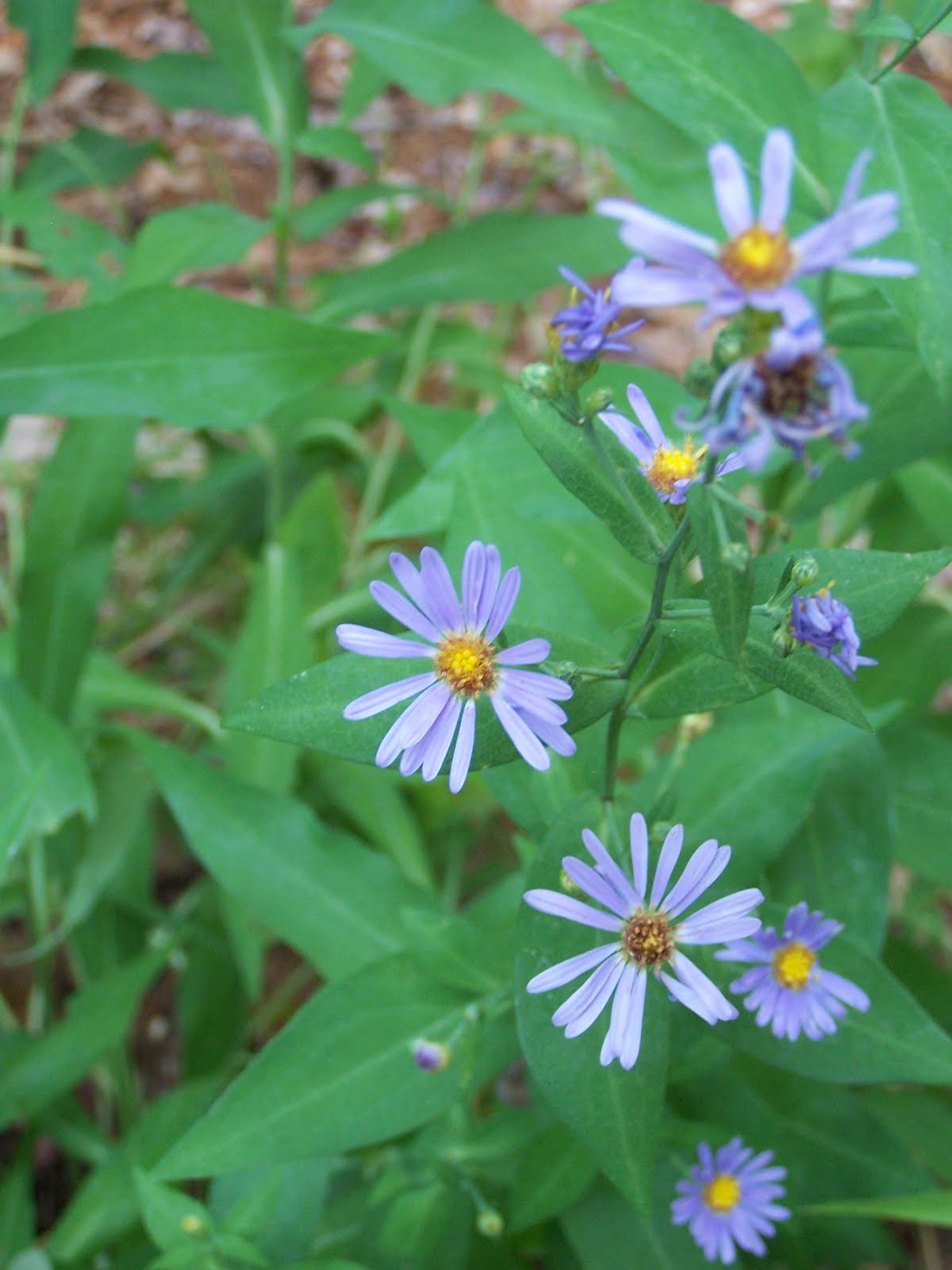
I’m usually tired of the garden by now, and there’s not much to look at anyway, aside from a pale purple carpet of eastern aromatic asters near a giant boulder. October’s slanting light is beautiful, but by November the days are short and thick clouds often block the sun. I have the gift – or curse – of sensitivity to light, and I feel the change of seasons as my outlook darkens and all I want to do is sleep. It’s a season of death and dormancy, and it seems ridiculous to hope, or even think of spring, before the leaves have finished falling from the trees.

Yet I count on gardening for a sense of renewal, so I was glad it was my day to volunteer at the North Carolina Botanical Garden. We raked paths, pulled bittersweet and honeysuckle, picked up sticks. Inexplicable that these tasks could be so satisfying. But the sun was warm and I find it impossible to brood when gardening.

Buddhist monk Thich Nhat Hanh advises seekers of mindfulness to devote full attention to what you’re doing, no matter how mundane. When you wash the dishes, wash the dishes, he says. Easy to say and almost impossible to do, but I come closer in the garden than elsewhere. When you weed, weed. When you rake, rake.

Tuesday, July 7, 2009

Rain and appreciation


We finally got rain Sunday after nearly three weeks without. It's been a relief these past two days not to have to do morning rounds in the garden, lugging buckets of water to the thirstiest plants. As I do every year, I made the mistake of continuing to transplant shrubs well into May. I vow each year to stop transplanting by the end of April, but there's always just one more. That craving for more that never quite goes away. I tell myself to look out at what's in the garden and simply appreciate, not focus on what's missing. The last few days I've been appreciating white phlox "David." Pure white, visited by the ruby-throated hummingbird, which also appreciates the monarda nearby. So do the bees - I see now why the common name is "bee balm."

Friday, May 25, 2007

Climate Change in Chapel Hill

Much media attention has been paid in the last year to climate change and some of the more dramatic possible global consequences--sea level rise, drought, and disrupted water supplies, with poor nations bearing much of the burden. But, as a Chapel Hill gardener and frequenter of nature trails, I began to wonder what may happen in my own backyard.

The last 100 years have seen a warming and drying out in piedmont and coastal North Carolina. Temperatures rose significantly in the piedmont and coastal regions, with an increase of 3 degrees F in coastal Carolina between 1911 and 2002, according to a 2006 report by the State Climate Office of North Carolina. Although maximum summer temperatures did not increase significantly in the state in the last century, minimum temperatures rose, particularly in urban areas. As for rainfall, the greatest decrease occurred in Chapel Hill, which saw a decline of 4.1 inches between 1893 and 2002.

Although the International Panel on Climate Change has little to say about global warming’s likely consequences in the Southeastern United States, climate scientists do predict that an increase in temperatures will be accompanied by more frequent storms, more heavy rainfalls, and more frequent droughts.

Flora at the southern end of their distribution range, such as those found in the Appalachian Mountains, will be particularly affected by warming, according to a study by the National Biological Service. Spruces, firs and the rare endemic herbaceous plant, Geum radiatum, are highly vulnerable, says Johnny Randall, assistant director for conservation at the North Carolina Botanical Garden.

Closer to home, Randall says he worries most about Catawba rhododendrons growing on north-facing slopes of Morgan Creek. These rhodies are not particularly well adapted to warmer temperatures and unpredictable rainfall. “I think we’ll see them drop out relatively quickly,” he says.

If plants that like cool conditions may be losers, vines may well be winners in a warming climate. This includes the backyard scourge (and native) poison ivy, Toxicodendron radicans, as well as exotics like Japanese honeysuckle, Lonicera japonica. A study by Duke University found that poison ivy grew 2 ½ times faster with increased carbon dioxide.

A changing climate also favors weedy exotics such as Microstegium vimineum, says Randall. Weeds tend to take over disturbed sites because they are highly adaptable and have a lot of genetic diversity, traits that may give them even more of an edge when some native plants begin to struggle.

Some early shifts in vegetation are already detectable in the Piedmont, as wax myrtle (Myrica cerifera) and Baccharis halimifolia have begun moving inland from the coast, Randall says. It is unclear, however, whether this is related to global warming or to land disturbance created by development, he says.

What’s a gardener to do in these uncertain times? I began to wonder if my neighbor who created a garden entirely of tropicals had the right idea. But Randall helped abolish these heretical thoughts. “Planting native plants is more important than it ever has been if we want to maintain some biodiversity,” Randall says. Biodiversity is an important component of ecosystems’ resilience to change. Another reason to continue using Southeastern native plants in our gardens is that most of them are already are adapted to extremes of weather—heat, periods of drought, and heavy rainfalls.

So, I’m planting a variety of natives, most of them somewhat drought tolerant. I study the heat zone maps and avoid buying plants that are already at the southern end of their comfort zone. I installed a rain barrel to catch runoff from heavy rains and keep my new plants alive during droughts. And, most important, I’m doing what I can to reduce my carbon footprint.