The garden surprised me this morning with this beautiful bloom, the first of the season on Rose of Sharon 'Helene.'

Often I am disappointed that I can't get the camera to record the beauty of what I see. But sometimes the camera makes beauty out of something ordinary. I almost missed the hidden bloom on the Rose of Sharon.

I've been watching the beebalm flowers emerge. Before I picked up the camera and began documenting my garden, I rarely paid attention to the beauty of emerging blooms.
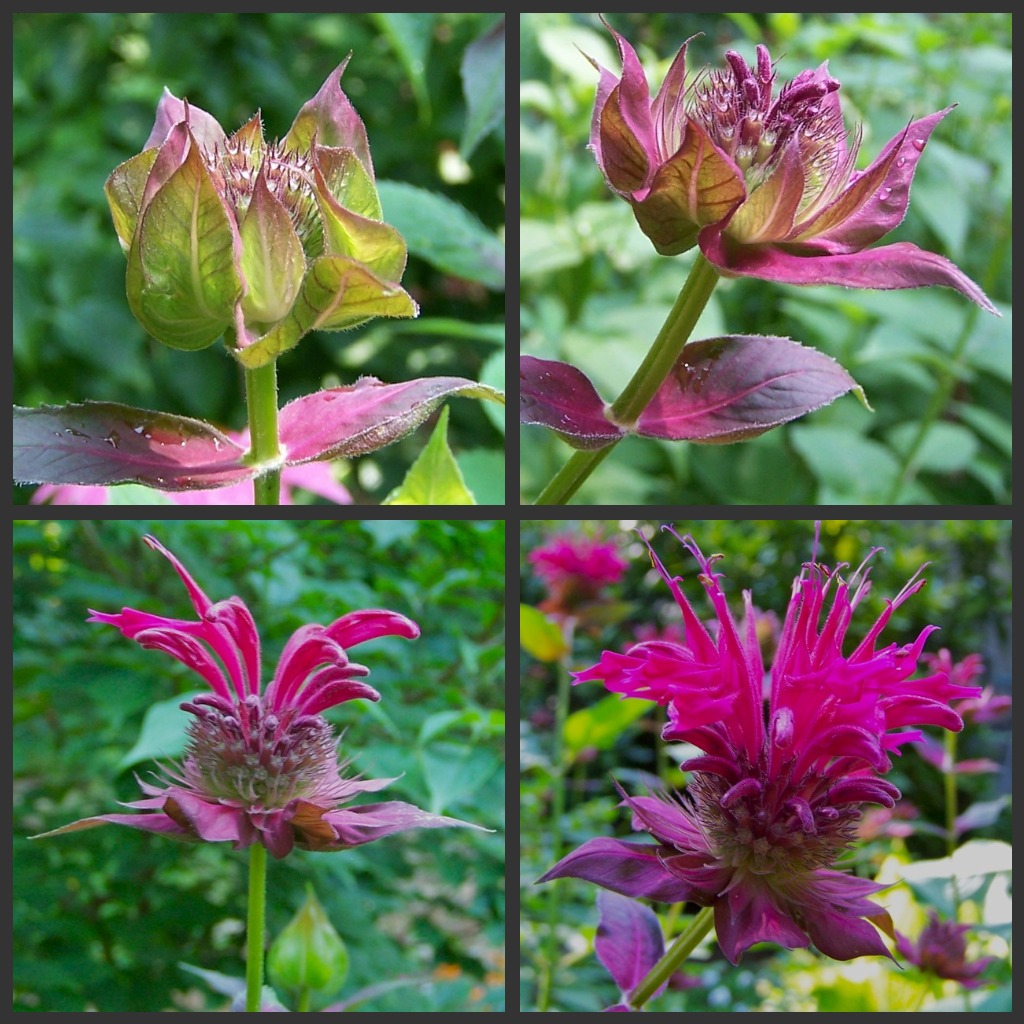
Beebalm (Monarda didyma 'Raspberry Wine') has commandeered a sizable patch in my too-small sunny perennials bed. Actually, it's only a part-sun bed, but sunny is a relative term in the woodland garden. The bees and butterflies love it, so I don't have the heart to groom the monarda patch the way I probably should.
It grows with coneflower in my garden. Hmm ... these were sold to me as dwarf coneflowers a few years ago. Maybe one of the plants is still a dwarf.

I've also been watching the coneflowers (Echinacea purpurea) emerge. They have a different personality in each stage. Coneflowers, too, attract butterflies.

Blue flowers look cool in the heat. Salvia guaranitica grows in part sun and is visited regularly by the ruby-throated hummingbird.

Dwarf plumbago (Ceratostigma plumbaginoides)
is attractive on the edge of the bed. I think it would flower better in full sun, but I'm happy with anything that flowers.

A frilled pale yellow lily (name tag long lost) has been blooming prolifically under Salvia guaranitica. It has a wonderful fragrance, too.

Speaking of fragrance, Gardenia jasminoides 'Radicans' is now in full bloom. It's a low-growing variety that blooms after Kleim's Hardy has finished flowering. It has wonderful, intricate blossoms.

Abelia is also in full bloom. Its blooms are dainty and waft a sweet scent over the stone walkway. I like its arching branches. It nicely screens the neighbor's house, too.

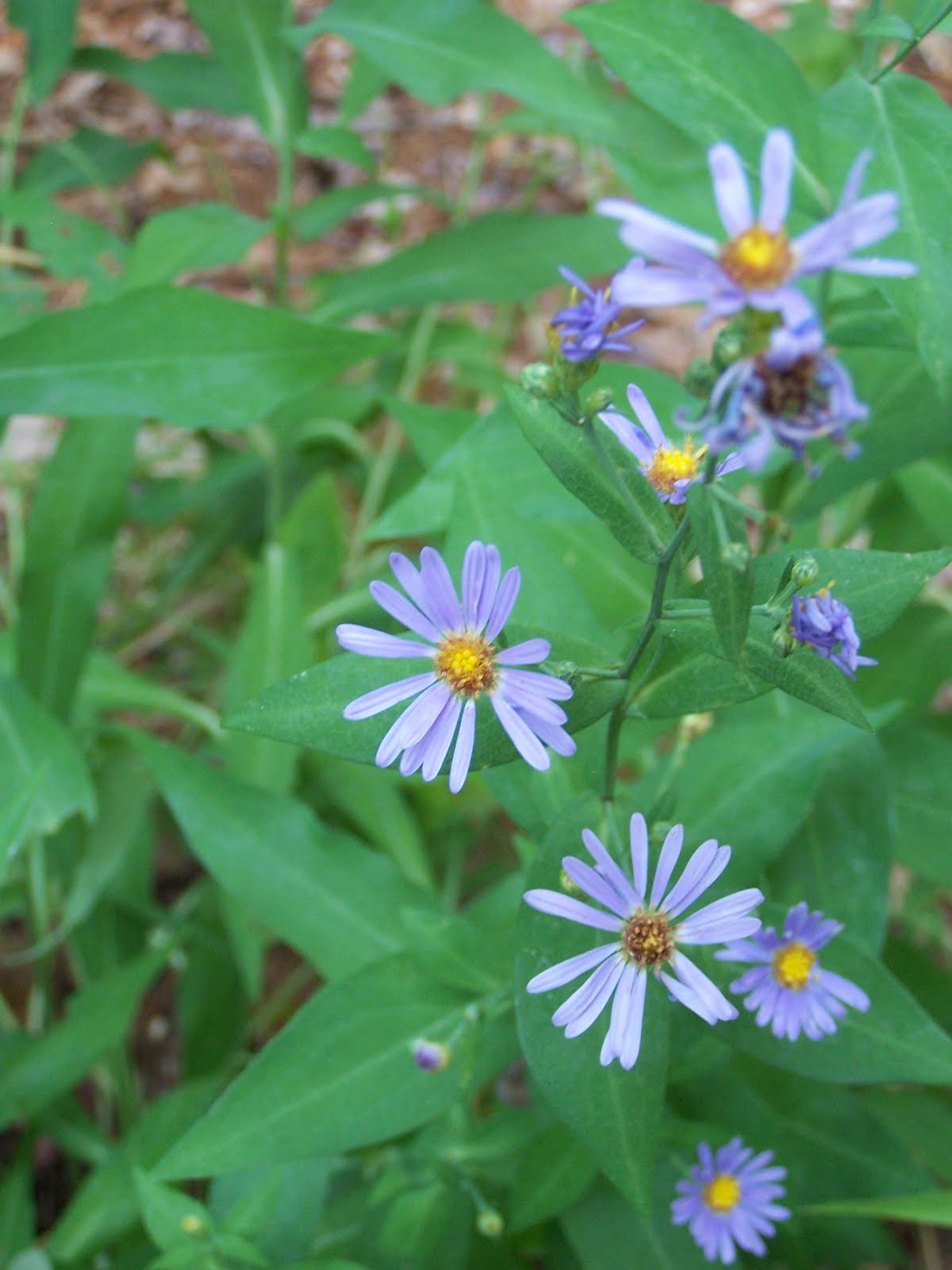
This aster is blooming now. I lost its name tag, too. I didn't suspect I would become a garden blogger.
I adore the cheery yellow blooms of rudbeckias (Rudbeckia hirta) and the way they self-seed. They don't bloom much in part sun and tend to flop over. Darn. The goldfinches don't help when they try to land on the stems. (Imagine being light enough to cling to a flower stem.)

Virginia mountain mint (Pycnanthemum virginianium) is a native plant with miniature blooms that attract pollinators, including butterflies.

Last is one disappointment, Coreopsis verticillata. I planted three plants five or six years ago. They bloomed well the first few years and spread to form a mass. As soon as they took over a good portion of the "sunny" perennial bed, they decided to be stingy with blossoms. I threatened them last week after reading Jean's post, Bloom or Get Out. I see what look like tiny yellow buds on them, but they've been there for weeks. I'm tempted to pull them out now, but it's really stupid to put in new plants in midsummer in North Carolina. I should know - I do it almost every year.

When I look, I always find more in bloom than I think in the woodland garden.


