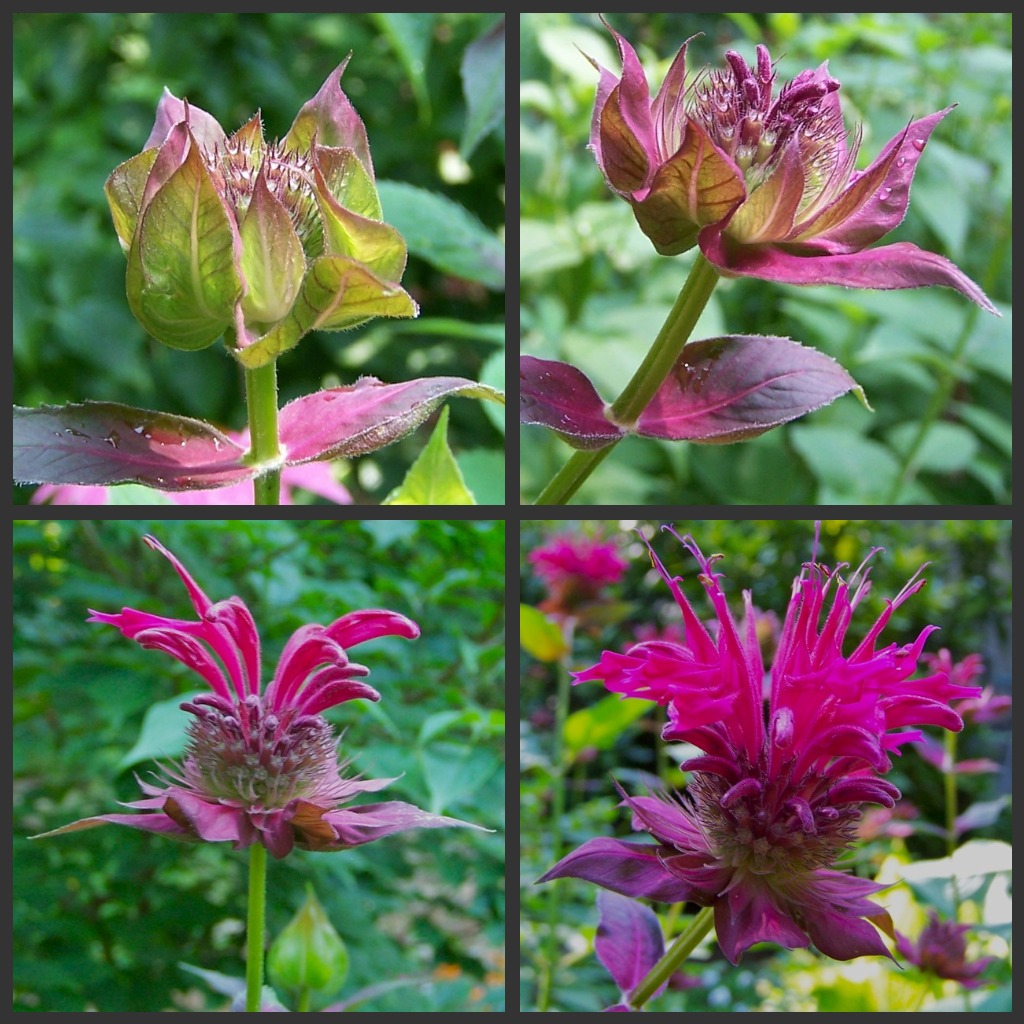
One of these months, I will manage to put together a post on what's blooming in my garden in time for Garden Bloggers' Bloom Day. This time, I was distracted by fawns. Also, July is not a particularly good month for blooms in the South, especially in a shady garden. But I do have a few plants to show you. Pineapple lily (Eucomis comosa 'Sparkling Burgundy') is one of the more exotic plants in my garden, with large purplish-green, sword-shaped leaves.

The bloom is just emerging - I don't think it looks like a pineapple, but it is interesting. The plant takes no special care, despite its exotic looks.

The cherry tomatoes are getting close to ripening. I didn't get them in the ground until mid-May this year, so it's been a struggle to resist temptation to buy them at the farmer's market. But I know that soon will come the time when we have bowls overflowing with yellow (Sun Gold) and red (Sweet Million) cherry tomatoes.

If I had to choose a favorite annual for pots, it might be torenia. It grows well in part shade and has inviting tubular flowers. A local nursery was kind enough to order six-packs of torenia after I inquired about it. Ruby-throated hummingbirds visit it.

Ruby-throated hummingbirds also like Salvia guaranitica. When I was photographing the salvia yesterday evening, I heard the familiar whir as one came to dine, then zipped off, perhaps startled by my presence at its one of its favorite hangouts. (As far as I can tell, ruby-throated hummingbirds could care less about the myth that they are particularly attracted to scarlet flowers. In my garden, they visit white phlox, pink impatiens, purple and pink torenia, and blue salvia as well as red monarda.)

Here is a rudbeckia hirta that seeded itself in the vegetable garden. I'm glad I didn't pull it out.

Here is something else seated in the vegetable garden. The little rabbit is getting bold. After he ate all the beans off the bush plants while we were in the mountains, I made a deal. The bunny can have the rest of the bush beans. I get the pole beans. However, the next day, the bunny violated the peace accord by biting off several of the pole bean vines. And today, here he is, caught in the act of blithely munching on the bush beans. He kept right on munching though I was only two feet away. Clearly, he knows I have a soft heart.

Some garden surprises, like finding wilting pole beans irrevocably severed from their roots, are not so good. But I usually find more pleasant surprises in the garden. This year, a favorite surprise has been this patch of zinnias (Lilliput) that self-seeded themselves after I didn't deadhead last year's planting. (Why do so many garden writers recommend deadheading?!) I like the smaller flower heads of these zinnias.

Butterflies usually flock to Joe Pye weed, which is just starting to bloom in the sunny bed along the street. This is a dwarf variety that grew to 7 feet tall last year, ignoring the write-up that said it was supposed to be 4 feet tall. This year it's about 4 feet tall. Plants have minds of their own.

If you live in the South, please excuse the next photo. Crape myrtles are overplanted by commercial landscapers in mono-color rows along most roads and shopping centers, which has the unfortunate effect of numbing me to their beauty. But I think this specimen looks lovely in our wooded back garden. It has been blooming well the last couple of years, ever since I removed the black landscaping plastic that I discovered a previous "gardener" had placed around its base (and most everywhere else in the yard). That's a subject for another post!

Finally, a gardenia that looked earlier this spring like it was yellowing and dying has now greened up and is showing occasional blooms. I believe it's August Beauty.

I hope you enjoyed the tour. I am dreaming of cooler weather and non-baked out cottage gardens! I hope to get to Maine in August.