Monday, June 6, 2011

The $10 Perennial

Buying plants is my biggest vice. Perhaps it's not a vice, but it has sometimes seemed to be one during the past couple of years, when I haven't been working full time. But plants are so beautiful and when I go to the nursery, they call to me. And since I want some semblance of order and design in my casual, mostly native plant garden, I often succumb to the landscape designers' rule: three to five of each plant. The cost rapidly escalates - particularly when the three to five new plants decide they don't like conditions in my garden, or the deer fail to read the "deer-resistant" label accompanying the plants.

I've been evolving from a buyer of plants to a divider and seed scatterer. The change is in part because after eight years gardening in one place, many plants are thriving and just begging to be divided. My faith in the processes of life has been growing, and I now look at a seed and see hope - and the joy of watching the transformation from a small, dry, inert object to living growth.

But there is another factor here. The price of plants has jumped dramatically. While I once was willing to pay $6.99 for a new perennial, $9.99 is ridiculous. 


It's also become more difficult to find young annuals in inexpensive six-packs. Instead, the garden centers stock large plants in bloom and charge absurd prices. 

These zinnias were being sold for $5.99 at my favorite garden center.


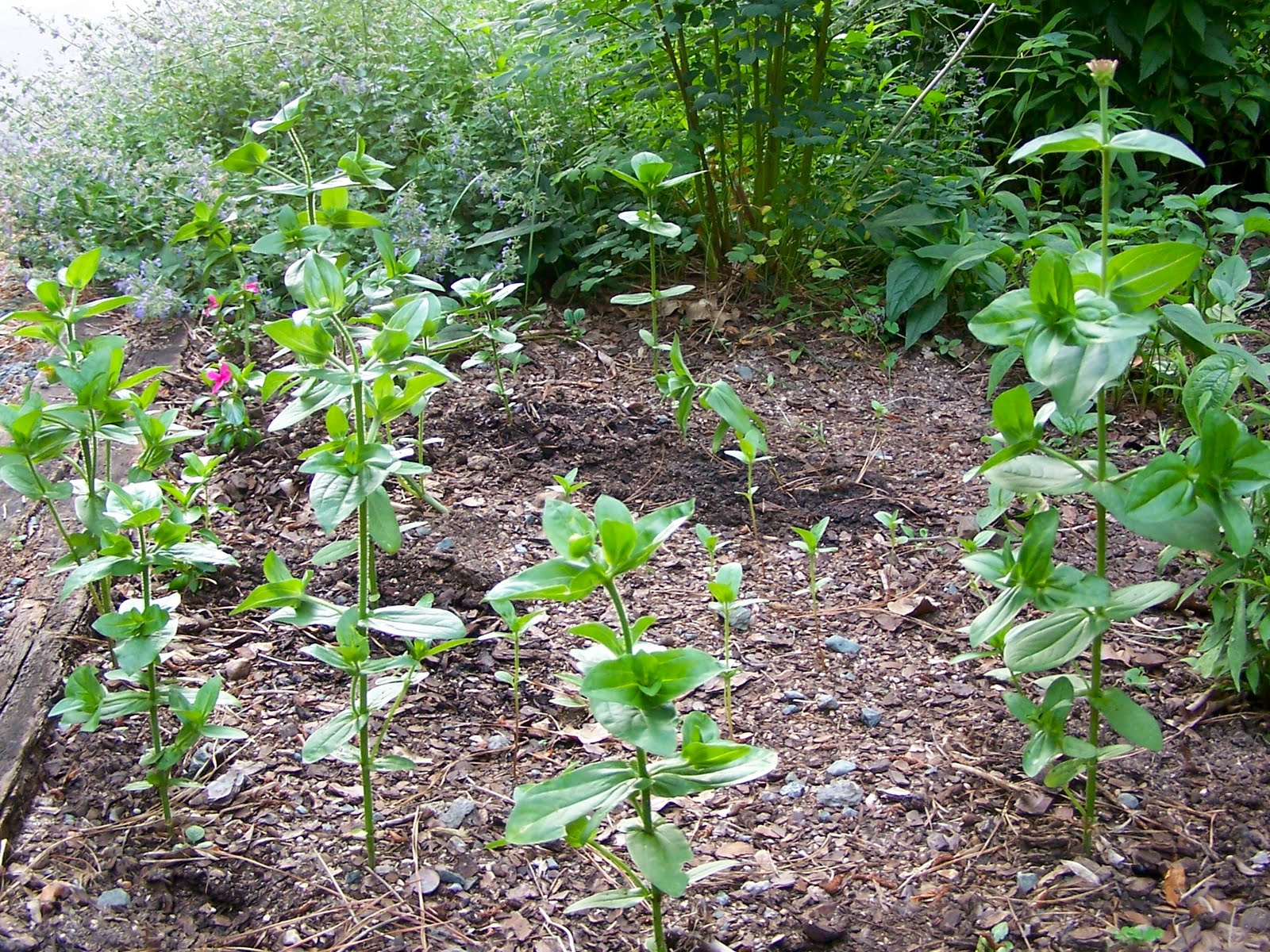
Last year, I never got around to deadheading the zinnias, and they self-seeded under the mailbox and the sunny perennials bed along the street. For free. 

Another plant industry practice I don't understand is that of putting out for sale, as soon as the last frost date has passed, hanging baskets that are so full of bloom that there's no room for growth. 

Would you pay $34.99 for this hanging basket?


Or $17.99 for this one?


I planted the container below with impatiens, a curly parsley plant from the farmer's market, and torenia that I was fortunate enough to find in a six-pack for a total of $2. 


The container is not lush. But it's only June and we have five months of the growing season left. I will get more pleasure out of watching this container grow and bloom than out of the ready-made greenhouse baskets that I could have obtained for the price of a dinner out.

Plants are so much more than another thing to buy and install at the home. And with the ridiculous prices, I scattered more seeds this year and hoped. Some got eaten. Some didn't germinate, possibly because of extremely hot weather early in the season. But many came up and are growing well. There is no guarantee in nature, but there's unfailing interest in observing the process of life.

Saturday, June 4, 2011

Daylilies Say: Don't Worry

Consider the lilies of the field


how they grow


They neither toil nor spin


Yet I tell you, even Solomon in all his glory


 was not arrayed like one of these.


Matthew 6:28b-29

Have a peaceful day!


Friday, June 3, 2011

Zebra Swallowtail Butterfly

Perhaps my favorite native perennial is Asclepias tuberosa. In summer it's covered with tiny, beautiful bright orange blossoms, and is a magnet to butterflies. Hence the common name, butterfly weed. It grows in part sun in the worst clay soil on the property without any care. This year I was delighted to see it attracted a butterfly I'd never seen before - the zebra swallowtail. 


To see other interesting creatures, check out the Friday Creature Feature at Garden Adventures.

Wednesday, June 1, 2011

Part 2: What's in Commercial Compost? Nobody Knows

I drove around town for a week with bad-smelling compost.
Yesterday I wrote about how, under the spell of an overwhelming desire for a Japanese maple, I ended up with a truck full of bad-smelling compost. After several days in which the smell did not dissipate, I asked a gardening friend to come by give a second opinion. That was a first – inviting someone over to smell compost. Meanwhile, I put on my former journalist’s hat and made some calls.

The man from the Orange County agriculture cooperative extension immediately put me at ease by 1) not dismissing me as a crank and 2) saying he, too, is “into smelling dirt.” He said he regularly receives calls from people reporting problems with compost. “There’s really no regulation at all on what goes in and what goes out and what’s being sold as compost,” he said. Waste gets moved all over the world these days, and there’s no testing of what’s in it, he said.

The main problems homeowners report are compost infested with weeds – compost is a common way to get Bermuda grass and nut sedge. Sometimes bad compost turns plants brown. “What occurs when piles are not turned as frequently as the should be is they go anaerobic on the inside. It creates a lot of stinky things, which is not only bad to smell but bad for plants,” he said.

I was somewhat relieved when the cooperative extension man said that it’s not common to find outright contaminants in compost. But, then again, since no one’s required to test compost, how are we to know that?

I had become concerned about toxic compost after doing some research online. In 1999, in Washington State reports surfaced of plant damage due to compost contaminated with the herbicide clopyralid. The state later banned the use of clopyralid in products sold to homeowners. And in Britain in 2008, many gardeners reported vegetables withering after applying manure that turned out to have been contaminated by the herbicide aminopyralid. (There are many reports of contaminated compost - too many to summarize here.)

This compost smelled like cigarette butts.
And I wasn't too pleased about the orange mulch, either.
I was surprised to learn that in my home state of North Carolina, in the last three years gardeners and farmers have reported problems with contaminated horse manure that wound up in compost. Farmers frequently spray powerful broad-leafed herbicides on hayfields, and as even a child knows, what goes in must come out. Horses and cows are fed the hay, the manure is collected and then is sold for use in compost. Some of the herbicides remain in the soil even years after the compost is applied, the cooperative extension man said.

Tomatoes are among the plants most sensitive to residues of these herbicides. So are beans. Great. Aside from herbs, tomatoes and beans are my summer vegetable garden.

By then, I wasn’t feeling too happy about all the compost, both bulk and bagged, that I had spread over my garden in the last eight years. Perhaps bagged compost is safer? I asked. “Bags are another mystery product. You never know what you’re going to get,” he said.

I asked for advice. How can be sure I’m buying a product that I feel safe to use in my organic garden? The extension specialist said he does two things when buying compost:

1) Visit the place where you’re buying the compost from and look at the piles. You want to see that the pile has been turned, that it doesn’t have an odor, and that it doesn’t have weeds growing on it.
2) Take a cup of soil from the pile, bring it home and do a bioassay test. Plant radish seeds or grass seeds (something that’s going to germinate in a few days). Wait to see if they come up and when they do, how they grow.

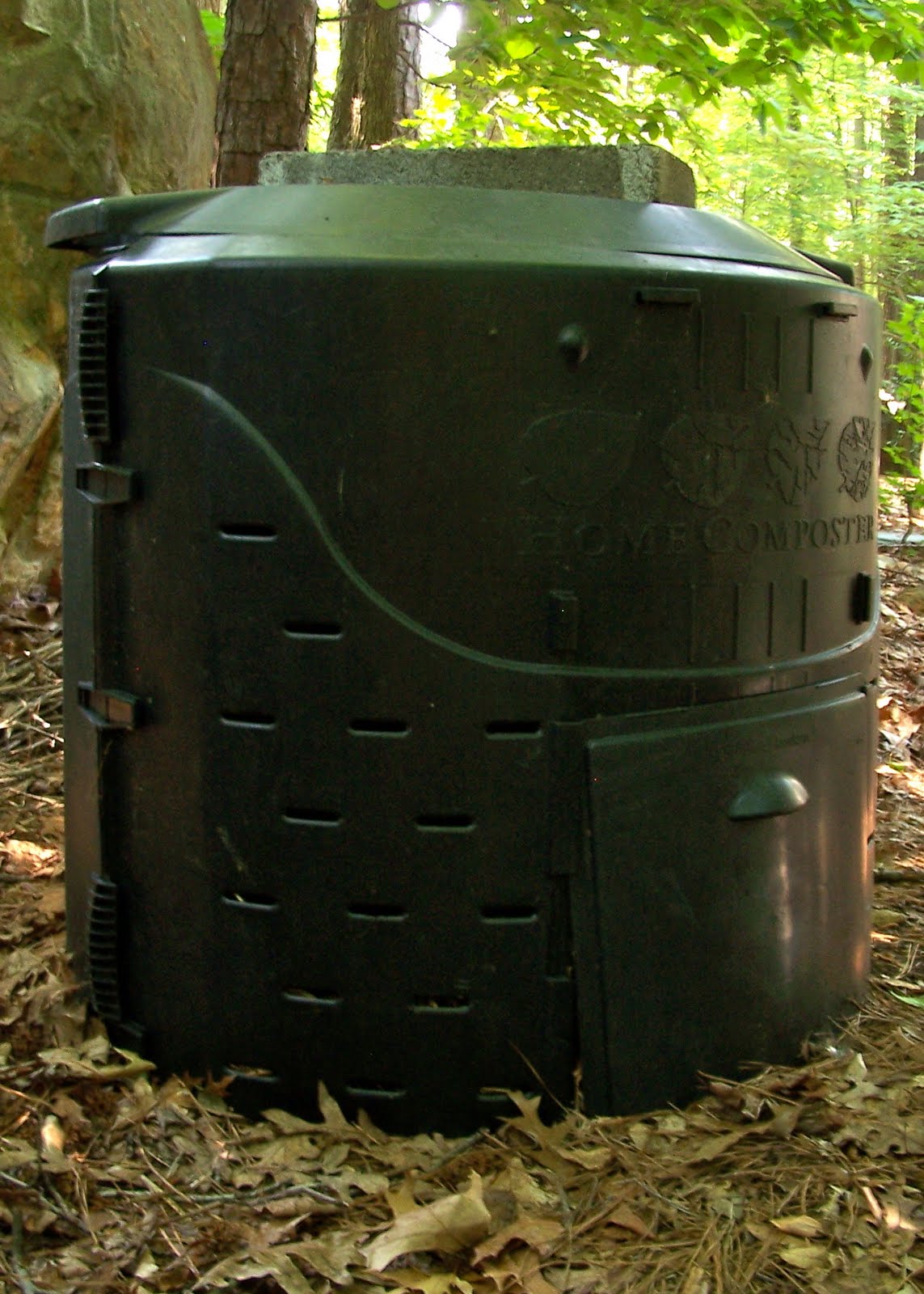
The backyard composter.
“Aside from that, it’s about impossible to determine if you’ve got contaminants in your compost,” he said. I tried to imagine myself, every time I wanted compost, driving an hour and a half to the company that makes most of the compost sold in our area, inspecting the piles, taking a cup of soil, planting seeds and waiting for them to grow. And by the time the seeds were up, wouldn’t a different batch of compost be available for sale?

I made a quick decision. From now on, the only compost that I’m putting on my garden is that from my own pile, where I can control what goes in and know what comes out.

P.S. At the suggestion of my gardening friend, I donated the compost to the gardens of the group home at which I volunteer. I still don’t feel quite right about it, but she said they were  happy to have it.


For information on how herbicides in soil affect tomato plants, click here.

For an excellent overview from North Carolina State University on the problem of herbicide carryover in compost, click here.

.

Tuesday, May 31, 2011

Part 1: Haste in the Garden

Japanese maple "Shadow's Select"
It all started in mid-April with the craving for a Japanese maple. Never mind the old vow that I would not plant trees and shrubs in the spring. In our hot summers, new transplants need life support, and even with regular watering, they often die. It was almost Easter – what better to celebrate resurrection (and the grace of my husband’s survival of nearly a year since a major heart attack) than a new tree?

In my mind, I could see the heat coming. We were about to leave for a vacation in Florida. This tree must be found and planted. Now. So I visited a local nursery that specializes in Japanese maples and picked out a specimen. In talking with the nursery employee about growing conditions for Japanese maples, I admitted that the site I had in mind wasn’t ideal– hard clay under the canopy of a huge pine tree. If lucky, I would be able to dig four to six inches into the clay without hitting tree roots.  

No problem. I would build a “volcano” of rich, loose soil on top of the clay hardpan. Never mind my typical scorn of the proliferation of city trees planted on such volcanoes as installations, not gardening. The craving for the Japanese maple was overwhelming.

The nursery employee recommended the compost at the city landfill. He said it was made by a reputable contractor whom I had heard composted food scraps from restaurants and cafeterias. It was raining hard when I arrived at the landfill, so I didn’t bother to get out of the truck and inspect the compost.

The next day, filled with anticipation of a ceremonial tree-planting, I began shoveling the compost out of the truck. I picked up a handful of compost and inhaled. It smelled like an ashtray. Sharp, bitter, and not at all earthy. I inspected the compost more closely. It was black and loose, but drier and lighter than usual. Then I saw shreds of the kind of orange mulch popular with gas stations. As my plan was to put most of the compost on the vegetable garden after planting the Japanese maple, I was disturbed.  Just what had I bought?

What to do with a truck full of bad compost?
Now I had a pickup truck full of sour-smelling compost that I was not too eager to add to my garden. As a dedicated organic gardener, I am convinced that a healthy garden starts with healthy soil.  In an agony of indecision, I delayed the tree planting. 

I love soil. I love touching the earth with my hands. I often garden without gloves, just because I like the feel of the soil. I like to see worms squirming in the soil when I pick up a clump. This compost was lifeless. Every day I smelled it, hoping that the cigarette butt odor would have dissipated and been replaced, magically, with the smell of sweet earth.  Meanwhile, I drove around town for a week with a pickup truck full of compost, mentally kicking myself to giving in to the desire for instant gratification. 

It’s not a bad thing to want a Japanese maple. But why was I in such a rush? I’ve been trying hard to live a simpler life and get away from the consumer mentality that is so destructive to the earth. I try to slow down, to evaluate whether I really need something before I purchase it. I seek to live by nature’s rhythms and not be ruled by desire. If I had waited to plant the tree in the fall, our composted kitchen scraps would have been ready to amend the soil. As punishment, I ended up stuck with a truck full of suspect compost.  

P.S. The tree is doing beautifully. 

Tomorrow: Part 2 - I learn some disturbing things about commercial compost. 


Saturday, May 28, 2011

A Cicada Wrestling Match

For days, I looked for the 13-year cicadas (magicicada). I heard them singing in the distance. The cicadas appeared on the news after viewers reported a persistent buzzing noise that sounded like aliens landing. Supposedly these cicadas were everywhere, en masse, emerging from the ground to attract a mate, lay eggs and disappear underground for another 13 years. A phenomenon both fascinating and creepy.

So why weren't they emerging in my garden? I didn't particularly want to see large numbers of them crawling on my plants, like in this Missouri garden. Yet I have deliberately formed my garden to be attractive to insects because insects are vital parts of a healthy ecosystem and the staple of most birds' diets. So where were they?

My first sighting was a little disappointing - a dead cicada in the road. The round black body, huge red eyes and translucent wings are key identifiers.


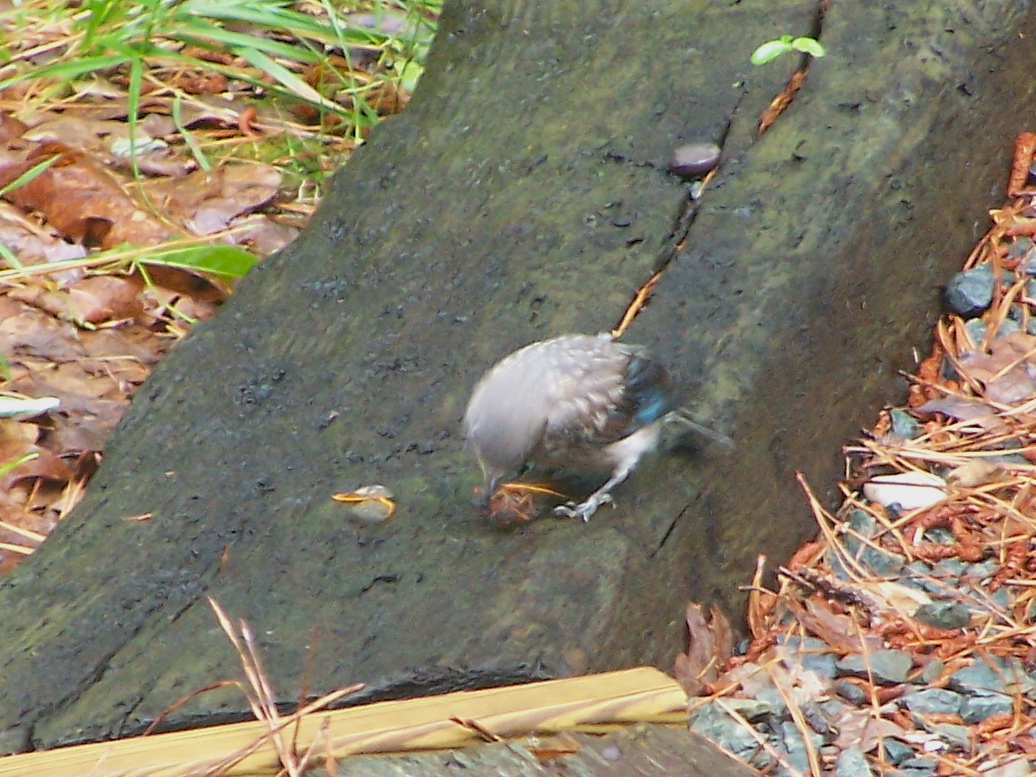
Yesterday I noticed the juvenile bluebird was back. I hadn't seen it in days and worried it had fallen prey to a cat or crow. The bluebird was hopping on the ground. And what did it have in its beak? A cicada!


At first the bluebird carried the cicada about. 


Then it began moving and twisting its head while banging the cicada on the railroad tie. I couldn't figure out what it was doing - was the big cicada proving too much for the bluebird to swallow?


The juvenile bluebird clearly knew just what to do. Only the torn off wings remain in the photo below.


Watching birds is far far better entertainment than TV ...

Friday, May 27, 2011

Copperhead: Don't Tread on Me

Yesterday, at the start of a walk in the woods, I tripped on a root and fell, twisting my ankle. For the rest of the walk, I was more cautious than usual, keeping my eyes on the path. That was fortunate. 
I saw the copperhead before I stepped on it. 


The copperhead slithered from the path in front of me and lay motionless in the dead leaves under an oak sapling, with its head about an inch from the path. I am not all that afraid of snakes. Although I wasn't eager to test the copperhead by continuing on the path, I didn't want to turn back. 

My first impulse was to photograph it, from what I thought was a safe distance of three feet away. 

I have wondered lately if photography is becoming an obsession. This was confirmed when I caught myself wishing the copperhead had not chosen to conceal itself in such difficult light conditions (it gets an A+ for camouflage, though).  And when I wished that I had the courage to move directly in front of the copperhead so that I could capture its entire body in the frame. 

Later, safe at home, I learned the following:
  • Copperheads are large snakes, tan to brown in color, with distinctive dark brown markings in an hourglass shape and a triangular copper-colored head. They are usually 24 to 40 inches long.
  • Copperheads are found throughout most of the eastern United States. They prefer deciduous open woodlands and locations near water, but also can be found in suburban areas in some cities.
  • The snakes freeze when they sense a threat. They rarely attack people unless provoked. Many bites occur when people inadvertently step on them.  
  • Copperhead bites are almost never fatal, but are extremely painful and have long-lasting effects. Herpetologists advise that the best way to avoid a copperhead bite is to leave them alone.
  • They are pit vipers, which means they detect prey through infrared sensors located in pits on their head. The snakes dine on rodents (including voles!), lizards, amphibians, birds, and insects.
For more information on copperheads, click here.

If you liked this post, you may want to check out Southern Meadows' recent post on snakes.