 |
| I drove around town for a week with bad-smelling compost. |
The man from the Orange County agriculture cooperative extension immediately put me at ease by 1) not dismissing me as a crank and 2) saying he, too, is “into smelling dirt.” He said he regularly receives calls from people reporting problems with compost. “There’s really no regulation at all on what goes in and what goes out and what’s being sold as compost,” he said. Waste gets moved all over the world these days, and there’s no testing of what’s in it, he said.
The main problems homeowners report are compost infested with weeds – compost is a common way to get Bermuda grass and nut sedge. Sometimes bad compost turns plants brown. “What occurs when piles are not turned as frequently as the should be is they go anaerobic on the inside. It creates a lot of stinky things, which is not only bad to smell but bad for plants,” he said.
I was somewhat relieved when the cooperative extension man said that it’s not common to find outright contaminants in compost. But, then again, since no one’s required to test compost, how are we to know that?
I had become concerned about toxic compost after doing some research online. In 1999, in Washington State reports surfaced of plant damage due to compost contaminated with the herbicide clopyralid. The state later banned the use of clopyralid in products sold to homeowners. And in Britain in 2008, many gardeners reported vegetables withering after applying manure that turned out to have been contaminated by the herbicide aminopyralid. (There are many reports of contaminated compost - too many to summarize here.)
 |
| This compost smelled like cigarette butts. And I wasn't too pleased about the orange mulch, either. |
Tomatoes are among the plants most sensitive to residues of these herbicides. So are beans. Great. Aside from herbs, tomatoes and beans are my summer vegetable garden.
By then, I wasn’t feeling too happy about all the compost, both bulk and bagged, that I had spread over my garden in the last eight years. Perhaps bagged compost is safer? I asked. “Bags are another mystery product. You never know what you’re going to get,” he said.
I asked for advice. How can be sure I’m buying a product that I feel safe to use in my organic garden? The extension specialist said he does two things when buying compost:
1) Visit the place where you’re buying the compost from and look at the piles. You want to see that the pile has been turned, that it doesn’t have an odor, and that it doesn’t have weeds growing on it.
2) Take a cup of soil from the pile, bring it home and do a bioassay test. Plant radish seeds or grass seeds (something that’s going to germinate in a few days). Wait to see if they come up and when they do, how they grow.
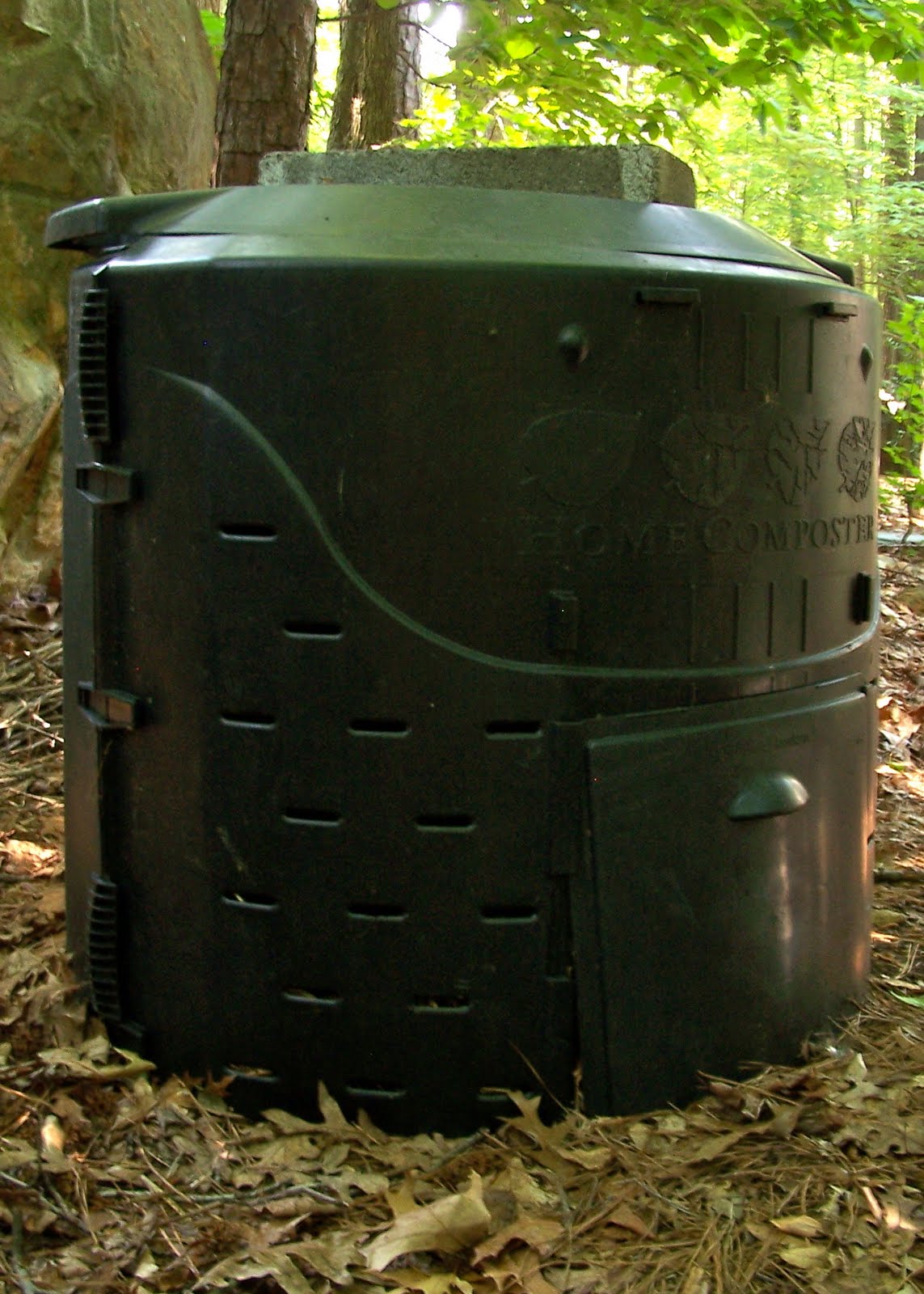 |
| The backyard composter. |
I made a quick decision. From now on, the only compost that I’m putting on my garden is that from my own pile, where I can control what goes in and know what comes out.
P.S. At the suggestion of my gardening friend, I donated the compost to the gardens of the group home at which I volunteer. I still don’t feel quite right about it, but she said they were happy to have it.
For information on how herbicides in soil affect tomato plants, click here.
For an excellent overview from North Carolina State University on the problem of herbicide carryover in compost, click here.
.

